Home Inspection Checklist for Fort Smith, AR Homebuyers
By DJ Taylor — Founder & Licensed Home Inspector (AR Lic # HI-2521 / OK Lic # 70002861), Certified Insurance Adjuster | Taylored Home Inspections
Quick Answer
This home inspection checklist for Fort Smith, AR homebuyers covers the roof and attic, foundation and structure, electrical and plumbing systems, and HVAC. Local risks like expansive clay soil, storm-driven wind and hail, and high humidity make a region-specific inspection essential before your due-diligence period ends.
Key takeaway: Buying in Fort Smith, Sebastian County, or the surrounding Arkansas–Oklahoma line? Book your inspection early in your option period so you have time to negotiate repairs — schedule at tayloredhomeinspections.com.
Why a Local Fort Smith Inspection Checklist Matters During Due Diligence
A national inspection checklist doesn’t account for what actually goes wrong with homes in western Arkansas. The soil, the storms, and the humidity here create failure patterns you won’t see in a generic online list — and missing them can cost you thousands after closing.
When you’re under contract, the clock is already running. Most Arkansas purchase agreements include a negotiated inspection or due-diligence window — commonly around 10 days, though your exact timeframe depends on the contract you signed. That short window is your one protected opportunity to inspect the home, review the findings, and ask the seller to repair, credit, or renegotiate before your earnest money is at risk.
That’s why working with a Fort Smith, AR home inspector who knows the local building stock matters. As a licensed home inspector in Arkansas and a Certified Insurance Adjuster with hands-on construction experience, I evaluate a home the way both a builder and an insurance company would — so you learn about hidden defects and potential underwriting problems before you’re the one paying for them.
Book early. The single biggest mistake buyers make is scheduling the inspection on day 8 of a 10-day window. Give yourself room to react to the report.
The Essential Fort Home Inspection Checklist For Fort Smith Ar Homebuyers
Here’s a system-by-system breakdown of what home inspectors check in Arkansas — and the regional issues I specifically look for around Fort Smith, Polk and Scott Counties, and across the Oklahoma line in Le Flore and McCurtain Counties (including Broken Bow and Hochatown).
1. Roof & Attic
Quick answer: Inspectors check roof covering, flashing, penetrations, and the attic’s insulation and ventilation. In western Arkansas, wind and hail damage plus poor attic airflow are the most common problems.
Our region takes a beating from spring storms, straight-line winds, and hail. Roof damage here is often subtle — bruised or fractured shingles that still look fine from the driveway but shorten the roof’s life and can trigger insurance disputes later.
What gets checked:
- Shingle condition — granule loss, hail bruising, wind lifting, and curling
- Flashing and penetrations — around chimneys, vents, and skylights where leaks begin
- Drone roof inspection where roof pitch, height, or safety makes walking it impractical — giving a close-up view without guesswork
- Attic insulation depth — under-insulated attics are common in older Fort Smith homes and drive up energy bills
- Attic ventilation — poor airflow in our humid climate traps moisture, leading to mold, rot, and premature roof failure
- Signs of active or past leaks — water staining, damp insulation, and daylight through the decking
Key takeaway: Storm-damaged roofs are one of the top reasons for insurance claim denials. Documenting roof condition before closing protects you from inheriting someone else’s storm damage.
2. Foundation & Structural
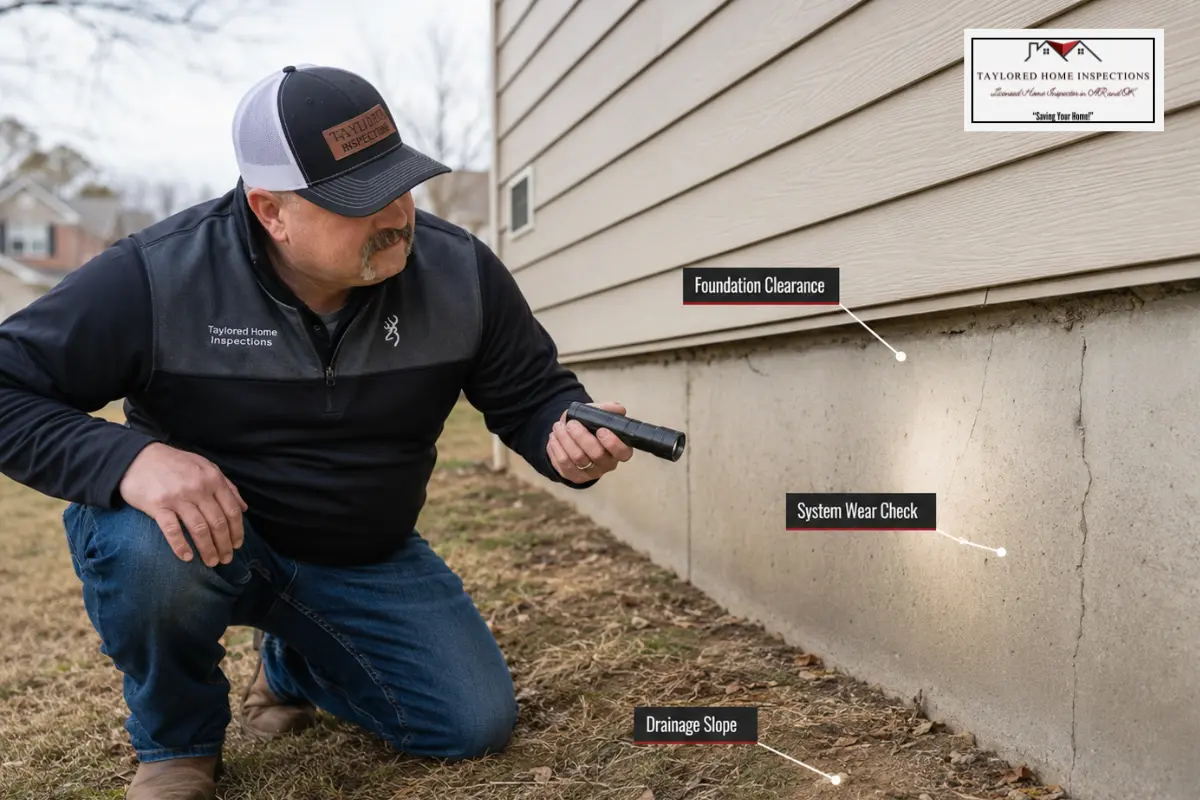
Quick answer: Inspectors evaluate the foundation, framing, and grading for movement. Western Arkansas and eastern Oklahoma soils shift seasonally, so settling cracks and drainage issues are especially common here.
The clay-heavy soils across the Arkansas River Valley and into the Ouachita foothills expand when wet and shrink when dry. That seasonal movement puts stress on foundations and is one of the most important things to evaluate in a local home.
What gets checked:
- Foundation cracks — distinguishing normal hairline cracks from stair-step or widening cracks that signal movement
- Slab and crawlspace condition — moisture, standing water, and support issues under the home
- Signs of settling — sticking doors, uneven floors, gaps at trim, and cracks above windows and doorways
- Grading and drainage — soil should slope away from the home; poor drainage feeds the exact moisture cycle that damages foundations here
- Retaining walls and site conditions, which matter on the sloped lots common near the Oklahoma hill country
Key takeaway: Not every crack is a red flag — and not every “cosmetic” crack is harmless. The difference is experience, and it’s where a wrong call costs you the most.
3. Electrical & Plumbing
Quick answer: Inspectors test the electrical panel, outlets, and safety devices, and check plumbing supply, drainage, and water heaters — often using thermal imaging to spot hidden overheating or moisture.
Older Fort Smith neighborhoods have a mix of updated and outdated systems, and safety defects here are both common and serious.
Electrical:
- Panel inspection — brand, capacity, and known problem panels; double-tapped or overloaded breakers
- Outlet and GFCI/AFCI testing in kitchens, baths, and exterior locations
- Aluminum or outdated wiring found in some older homes
- Thermal imaging to detect hot spots at connections that signal a fire risk before it’s visible
Plumbing:
- Water pressure and supply lines — including older galvanized or polybutylene piping
- Drainage and waste lines for slow drains and leaks
- Water heater — age, condition, and safety (TPR valve, venting)
- Moisture detection under sinks, around tubs, and at connections, where thermal imaging reveals leaks hidden behind finishes
Key takeaway: Electrical safety defects and hidden water leaks are two of the most expensive surprises for new buyers — and two of the most detectable with the right tools.
4. HVAC & Thermal Performance
Quick answer: Inspectors evaluate the heating and cooling system’s operation, age, and efficiency. In Arkansas, systems face hot, humid summers and cold snaps, so proper sizing and airflow matter year-round.
Our climate demands a lot from HVAC systems — long, muggy cooling seasons and genuine winter cold. A system that’s undersized, aging, or poorly maintained becomes an expensive first-year replacement.
What gets checked:
- System age and condition of the furnace, heat pump, or A/C
- Operation in both heating and cooling modes where conditions allow
- Ductwork and airflow — leaky or disconnected ducts waste energy in our climate
- Thermal performance — using imaging to reveal insulation gaps and air leaks that drive up bills and strain the system
- Condensate drainage, which matters in our high-humidity summers
New Construction Inspection Checklist for Fort Smith Buyers
Quick answer: A new construction inspection checklist in Fort Smith covers the same core systems plus builder-specific items — a pre-drywall inspection of framing and rough-ins, and a final walkthrough before closing.
New doesn’t mean flawless. Even quality builders miss things, and trades work fast. A new construction inspection checklist for Fort Smith buyers typically includes:
- Pre-drywall inspection — framing, structural connections, and electrical, plumbing, and HVAC rough-ins before they’re sealed behind walls
- Final/pre-closing inspection — a full systems check plus fit-and-finish items
- Grading and drainage established correctly around the new foundation
- Documentation you can hand the builder for punch-list corrections while it’s still their responsibility to fix
What Is a 4-Point Inspection in Arkansas?
Quick answer: A 4-point inspection in Arkansas focuses on four systems — roof, electrical, plumbing, and HVAC. Insurers often require it for older homes to assess risk before writing or renewing a policy.
A 4-point inspection isn’t a full home inspection — it’s a focused report insurance carriers request, usually for homes past a certain age, to decide whether they’ll cover the property and at what rate. If your lender or insurer asks for one, we can help.
The Insurance Advantage: Why an Inspector With Adjuster Experience Matters
Quick answer: An inspector who is also a Certified Insurance Adjuster sees a home through the insurer’s lens — flagging conditions that could cause claim denials or underwriting problems, not just repair items.
This is what sets Taylored Home Inspections apart. I’m not only a licensed home inspector in Arkansas and Oklahoma — I’m also a Certified Insurance Adjuster with real construction background. That combination means I can tell you two things most inspectors can’t:
- Whether a defect could become an insurance problem. Roof age, wiring type, panel brand, and prior water damage all affect whether a carrier will insure the home — and what you’ll pay. Finding these issues before closing lets you address them while you still have leverage.
- What a claim might actually look like later. Because I’ve assessed damage from the insurer’s side, I can help you understand which conditions are likely to be covered and which the carrier may push back on.
For buyers along the Arkansas–Oklahoma line — Fort Smith, Polk and Scott Counties, and Oklahoma communities like Broken Bow and Hochatown — this dual perspective can be the difference between a smooth closing and an expensive surprise after you’ve moved in.
How to Use Your Inspection Report to Make Better Property Decisions
Quick answer: Use your report to prioritize safety and structural issues, negotiate repairs or credits before your due-diligence period ends, and budget for future maintenance.
A good inspection report isn’t a pass/fail grade — it’s a decision-making tool. Here’s how to use it:
- Separate deal-breakers from maintenance. Focus first on safety, structural, roof, and major-system items. Cosmetic notes are for your future to-do list, not your negotiation.
- Negotiate while you still can. Bring priority findings to your agent and request repairs, a credit, or a price adjustment before your inspection window closes. This is exactly why booking early matters.
- Plan your budget. Even items you accept “as-is” tell you what’s coming — a roof with a few years left, an aging water heater, an HVAC system near the end of its life.
- Keep the report. It’s a baseline for future maintenance and a useful record for insurance conversations down the road.
Key takeaway: The report only helps if you have time to act on it. Schedule early in your option period.
Frequently Asked Questions
How much does a home inspection cost in Fort Smith, AR?
Home inspection cost in Fort Smith depends on the home’s size, age, and the services you add (like thermal imaging or a drone roof inspection). Contact Taylored Home Inspections for a quote specific to the property you’re buying.
How long does a home inspection take?
Most home inspections take a few hours depending on the size and condition of the home. You’ll typically receive a detailed written report shortly after, so you have time to review findings and act before your due-diligence period ends.
Should I get a home inspection on new construction?
Yes. Even new homes have defects that get missed during fast-paced construction. A pre-drywall inspection and a final pre-closing inspection catch issues while corrections are still the builder’s responsibility — well worth it on a major purchase.
Do I need a home inspection if I’m buying in Oklahoma near Broken Bow or Hochatown?
Yes — and it’s especially valuable in the hilly, wooded terrain around Broken Bow and Hochatown, where drainage, grading, and roof exposure matter. We’re licensed in Oklahoma (Lic # 70002861) and serve buyers on both sides of the state line.
What makes Taylored Home Inspections different from other Fort Smith home inspectors?
DJ Taylor is a licensed home inspector in Arkansas and Oklahoma, a Certified Insurance Adjuster, and brings direct construction expertise. That combination helps buyers spot hidden defects and insurance risks before closing — not just repair items.
Schedule Your Fort Smith Home Inspection Before Your Option Period Ends
Your due-diligence window is short, and it’s the one time you’re protected to walk away or renegotiate. Don’t spend it waiting.
Book online at tayloredhomeinspections.com to schedule your inspection with DJ Taylor — a licensed inspector, Certified Insurance Adjuster, and construction expert serving Fort Smith, Sebastian County, Polk and Scott Counties, and eastern Oklahoma including Broken Bow and Hochatown.
Buy with confidence. Know exactly what you’re getting — before you close.