Buying a home in Mena, Cove, Hatfield, or anywhere across Polk County is one of the largest financial decisions you’ll ever make. Yet the inspection that stands between you and a costly surprise is only as good as the person performing it. The phrase “home inspector” gets used loosely — but a certified home inspector is held to documented training, testing, and state licensing standards that a handyman with a flashlight simply isn’t.
Here’s what certification actually means in Arkansas and Oklahoma, why it matters for properties in our region, and how to confirm you’re hiring the real thing.
The Problem: Not Everyone Calling Themselves an Inspector Is Qualified
In a rural, mountain-influenced market like the Ouachita region, homes face conditions you won’t find in a suburban subdivision — heavy seasonal rainfall, freeze-thaw cycles, older rural construction, well and septic systems, and roofs that take a beating from Arkansas storms. Catching those issues takes training and local experience, not guesswork.
The risk of hiring an uncertified or unverified inspector is real: missed safety hazards, vague reports you can’t negotiate with, and no professional accountability if something is overlooked. When a single missed foundation or roof issue can cost more than your down payment, “good enough” isn’t good enough.
What Certified Home Inspector Actually Means
Both Arkansas and Oklahoma regulate home inspectors, and the standards are stricter than most buyers realize.
In Arkansas, home inspectors must be registered with the Arkansas State Board of Appraisers, Abstracters, and Home Inspectors, which requires qualifying education, passing the National Home Inspector Examination (NHIE), and carrying professional liability insurance.
In Oklahoma, inspectors must be licensed through the Oklahoma Construction Industries Board, complete 90 hours of approved education, pass the NHIE, and maintain continuing education each year.
On top of state licensing, leading inspectors hold credentials from national bodies such as the American Society of Home Inspectors (ASHI), which sets a widely recognized Standards of Practice and Code of Ethics. Certification through organizations like ASHI or ICA signals an inspector has committed to ongoing education and an ethical, consistent inspection process — not just the legal minimum.
Why Taylored Home Inspections Goes Beyond the Minimum
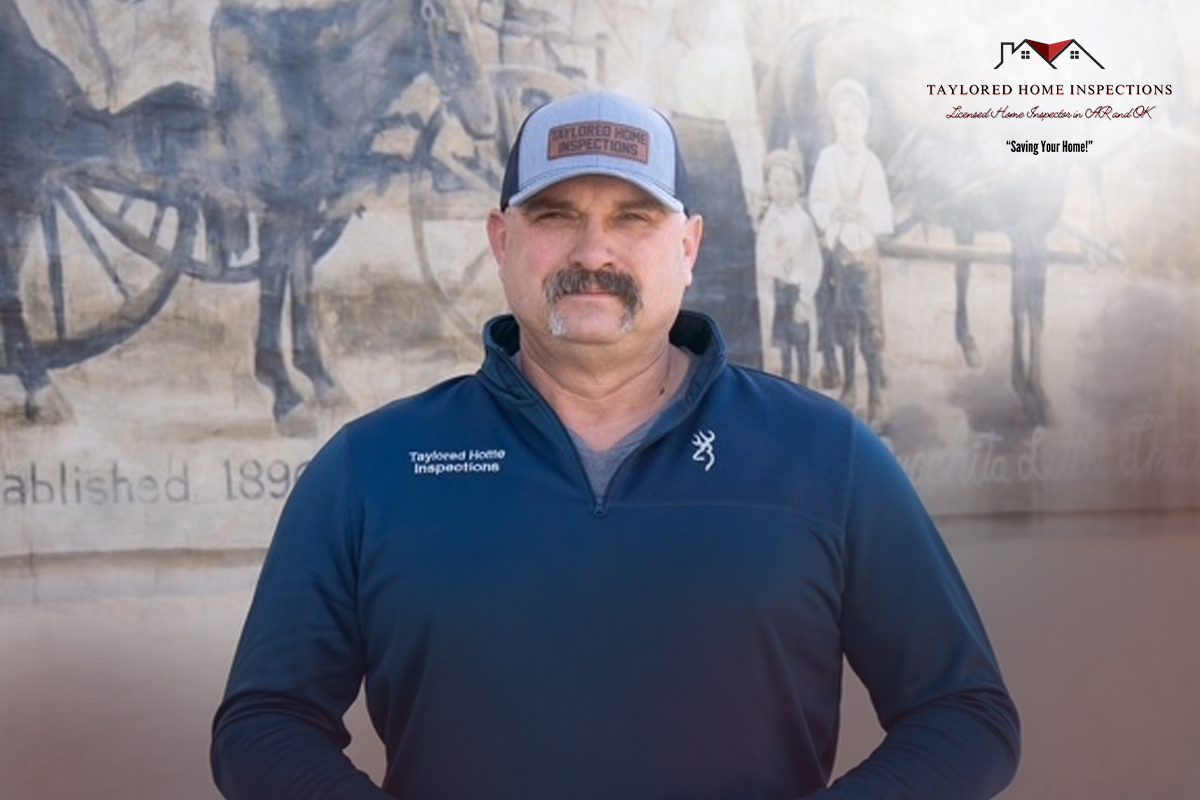
At Taylored Home Inspections, owner DJ Taylor isn’t just licensed — he’s licensed and insured in both states, holding Arkansas Home Inspector License HI-2521 and Oklahoma Home Inspector License 70002861, with ASHI and ICA certifications and credentials as a certified insurance adjuster in both states.
That dual background matters. Before becoming an inspector, DJ worked in home construction and insurance adjusting — so he understands not only how homes are built, but what repairs actually cost and how damage affects an insurance claim. That perspective turns an inspection report into a practical roadmap, not just a list of defects.
A certified inspection with Taylored also includes tools many inspectors charge extra for or skip entirely:
- Drone roof inspections for steep or storm-damaged roofs that aren’t safe to walk on
- Thermal imaging to reveal hidden moisture, insulation gaps, and electrical hot spots
- Same-day or next-day digital reports delivered within 24–36 hours, complete with photos and video
- Plain-language explanations you can use to negotiate with confidence
You can see the full scope of what a home inspector checks and the step-by-step Taylored inspection process for exactly how each job is handled.
How to Verify You’re Hiring a Certified Home Inspector
Before you book anyone, run through these five steps:
- Confirm the state license. Ask for the inspector’s Arkansas registration or Oklahoma license number, and verify it with the appropriate state board.
- Check national certifications. Look for ASHI, ICA, or similar credentials that require ongoing education and adherence to the Standards of Practice.
- Request a sample report. A thorough report should include photos, clear severity notes, and recommended next steps — not just checkboxes.
- Confirm insurance. A certified, professional inspector carries liability insurance for your protection and theirs.
- Read recent reviews. Real, current feedback tells you whether the inspector communicates clearly and shows up prepared.
A qualified inspector will welcome every one of these questions.
What Clients Say
The value of certification shows up at the negotiating table. As one recent Polk County buyer put it: “They caught a foundation issue the seller swore wasn’t there. The negotiation that followed paid for the inspection ten times over.” That’s the difference a trained, local, certified eye makes.
Related Services to Consider
Depending on the property’s age, location, and condition, a certified inspection pairs well with:
- Drone roof inspections for tall, steep, or recently storm-hit roofs
- Thermal imaging for hidden moisture and energy loss
- 4-point and wind mitigation inspections are often required for insurance approval
- Pre-listing inspections for sellers who want to get ahead of surprises
- New construction and construction-phase inspections to catch issues before they’re sealed up
Browse the full lineup on the services page, or see where we work on our service areas page — covering Polk, Scott, and Sebastian counties in Arkansas and McCurtain, Le Flore, and Pushmataha counties in Oklahoma.
Frequently Asked Questions
Is a home inspector required to be certified or licensed in Arkansas?
Yes. Arkansas requires home inspectors to be registered with the Arkansas State Board of Appraisers, Abstracters, and Home Inspectors, which includes qualifying education, passing the National Home Inspector Examination, and carrying professional liability insurance. Always confirm your inspector’s registration before booking.
What’s the difference between a licensed and a certified home inspector?
A license is the legal authorization a state requires to perform inspections. A certification — such as ASHI or ICA — is a professional credential showing the inspector meets a recognized Standards of Practice and commits to ongoing education. A strong inspector holds both.
Does a certified home inspector serve all of Polk County?
Yes. Taylored Home Inspections serves Mena, Cove, Hatfield, Vandervoort, Wickes, and all of Polk County, plus Scott and Sebastian counties in Arkansas and McCurtain, Le Flore, and Pushmataha counties in Oklahoma.
How long does a certified home inspection take, and when do I get my report?
A standard residential inspection takes about 2 to 4 hours, depending on the home’s size, age, and condition. You’ll typically receive a full digital report with photos and video within 24 to 36 hours.
How do I verify a home inspector’s certification?
Ask for their state license number and national certifications, then verify the license with the Arkansas State Board or the Oklahoma Construction Industries Board. You can also request a sample report and proof of insurance.
Schedule Your Inspection With a Certified Home Inspector Today
Don’t leave your biggest investment to chance. Whether you’re buying your first home in Mena, a cabin near Hochatown, or an investment property in Fort Smith, a certified home inspection is the smartest few hundred dollars you’ll spend in the entire transaction.